
Arrest Warrants in Custer County
Custer County arrest warrants trace to Title 22 §42. There, a magistrate reviews verified information under oath. If the magistrate finds just reason to fear the offense, a warrant may issue, directed to a sheriff, marshal, police officer, or other authorized peace officer. §43 handles a controverted information with testimony. A bench warrant is a different animal. It typically follows a missed appearance or a disobeyed court order rather than a sworn complaint. Both kinds can end in arrest, so ask the issuing court which one sits in the case file and whether it is still active.
Probable Cause Before a Custer Warrant
Probable cause means the magistrate weighed the sworn information against the legal standard a warrant requires. It says nothing about what happened later. Service, recall, and replacement live in the docket, not the statute. The issuing office holds that history. Read Title 22 for the framework, then bring a known case to the Custer County Court Clerk, which keeps the District Court record. A public account of a complaint, with its private identifiers, is not something to reproduce.
What a Custer County Arrest Warrant Contains
A releasable Custer County warrant record can show the court, case number, charge, issuing authority, issue event, bond instruction, and service or recall history. Not everything is public. Affidavits, sealed matters, and active-investigation material can stay closed.
| Issuing court | The District Court or municipal court that directed the process. |
|---|---|
| Case number | The identifier used to locate the docket. |
| Charge or statute | The offense description and legal reference when public. |
| Issue date | The event that authorized the order. |
| Bond status | Amount, recognizance, or no-bond notation when the court makes it public. |
| Service or recall | Later entries showing execution, return, recall, or quash. |
A name alone proves little in Custer County, so ask the clerk to tie the warrant event to the right case number.
Custer Arrest Warrants and Court Records
OSCN gives a county and court selector plus a case-number lookup, and the Custer County Court Clerk links ODCR as a second public route. Pull the case, note the warrant event, and confirm it with the clerk. Neither portal is a full arrest-warrant roster. The OSBI criminal-history source is separate again, with its own paid search and payment screens.
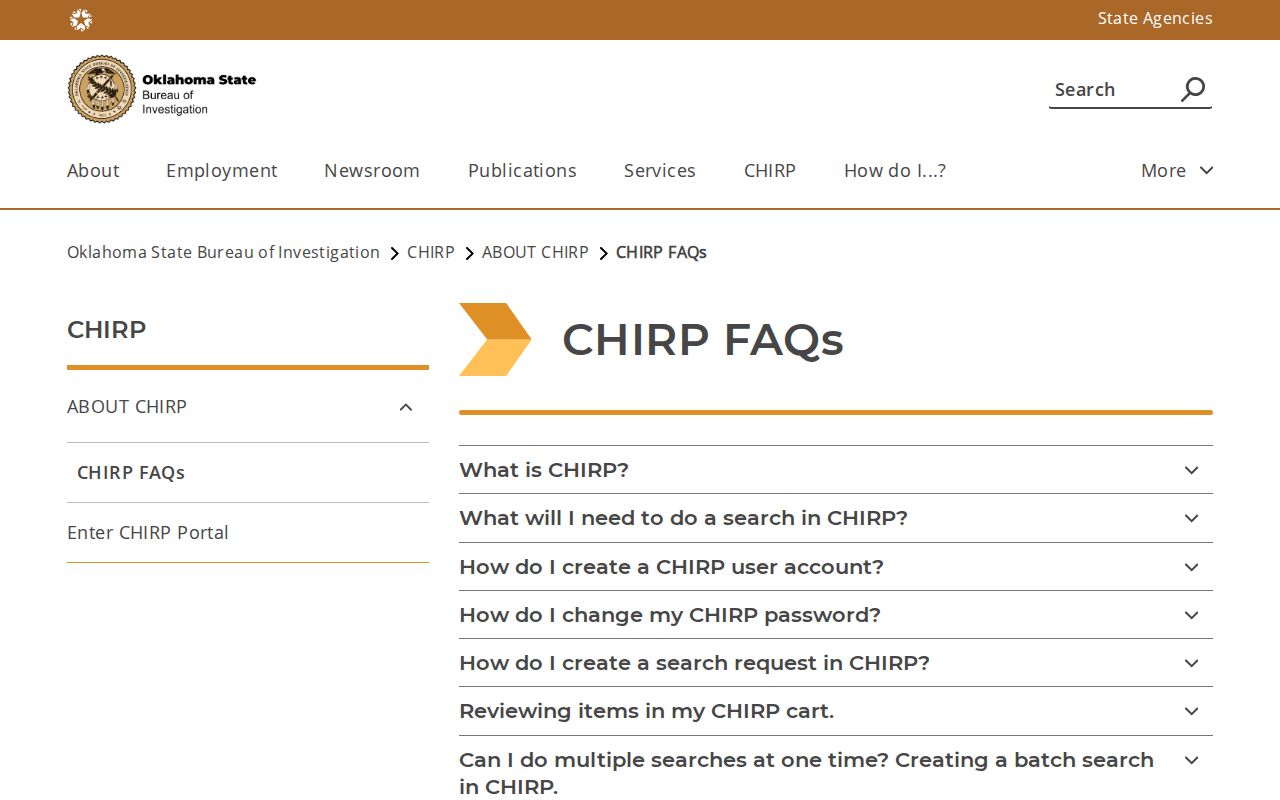
That official OSBI CHIRP page is a separate, paid criminal-history product. It shows search controls, not a Custer County active-warrant result. Keep the two straight. OSCN Rule 2.6 makes the same point: the public interface does not replace the internal case-management record, so a recall can lag what you see online.
How Custer County Arrest Warrants Are Served
Title 22 §§186 through 190 govern the arrest, covering peace-officer authority, timing, and actual restraint or submission. In Custer County, the Sheriff serves District Court process and runs the jail. City papers go elsewhere. Municipal police or a marshal execute them, and Title 11 lets an appropriate peace officer serve municipal process.
Custer County Sheriff's Office
300 North 7th Avenue, Arapaho, Oklahoma
580-323-1616
The Sheriff's contact page shows one conflicting number, so use the repeated official number for Custer County calls. Serving papers is not the same power as recalling a court order.
When to Call Custer County Offices
A Custer County District Court case starts with the Court Clerk, who answers docket and recall questions. For custody or jail procedure, call the Sheriff. A city citation goes to the municipal clerk.
| Question | First office | What to have ready |
|---|---|---|
| District Court status | Custer Court Clerk | Case number, name, missed date |
| Custody or service | Custer Sheriff | Notice, case or citation number |
| City ordinance case | Issuing municipal court | Citation, agency, court date |
Call ahead before you drive to the courthouse or jail in Arapaho, because the two Custer County offices there do different jobs.
Arrest Warrants, Summonses, and Bench Warrants
A summons just orders an appearance. A warrant commands an arrest. A bench warrant in Custer County usually follows a failure to appear or to obey a court order. An arrest warrant is different still, issuing after probable-cause review of a complaint or verified information.
| Process | Typical trigger | Confirmation route |
|---|---|---|
| Summons | Notice to appear | Issuing court and date |
| Bench warrant | FTA or order failure | Appearance docket |
| Arrest warrant | Probable-cause finding | Issuing court and serving agency |
These terms blur in everyday talk, so in Custer County repeat the exact wording the docket or notice uses.
Arrest Warrant Access in Custer County
Oklahoma's Open Records Act, 51 O.S. §24A.8(A)(6), points to warrant disposition records a law-enforcement agency actually keeps. That is a narrow door. An arrest affidavit, a sealed case, juvenile material, or an active-investigation record may stay closed. Court records are different. They stay public unless a statute or a public sealing order says otherwise. So make a focused request for an existing record. Name the office, the date range, the case or citation, the issue and return dates, and the recall or disposition fields you need. Ask for segregable portions and the legal basis behind any redaction, and read the Oklahoma Open Records Act before staking much on a broad request in Custer County.
What to Do If There's a Warrant for You
Call the issuing court. Bring in a lawyer. Ask whether the warrant is active, what bond or appearance route fits a Custer County case, and how a voluntary surrender or motion should be arranged. The jail, OSBI, or an empty inmate result will not answer every part.
Important: Do not wait for a roadside stop to learn the process; counsel can help confirm the court, bond, recall, or surrender route.
Defendants who qualify can turn to the OIDS Clinton regional office, which covers Custer County. A city case may belong with the municipal clerk instead.
Why the Jail Search May Not Show It
The Sheriff's inmate page lists people in custody, sorted by booked date. That is its whole job. An unserved arrest warrant, a city warrant, a sealed matter, or an order from another jurisdiction may not show up at all. No booking is not a recall. The court, not the jail, closes a warrant. Work the known case, ask the Custer County Court Clerk what the internal record shows, and keep the written reply; the official inmate page answers only the custody question.